Why Vinyl Is Back: A Rock Fan's Guide to Collecting
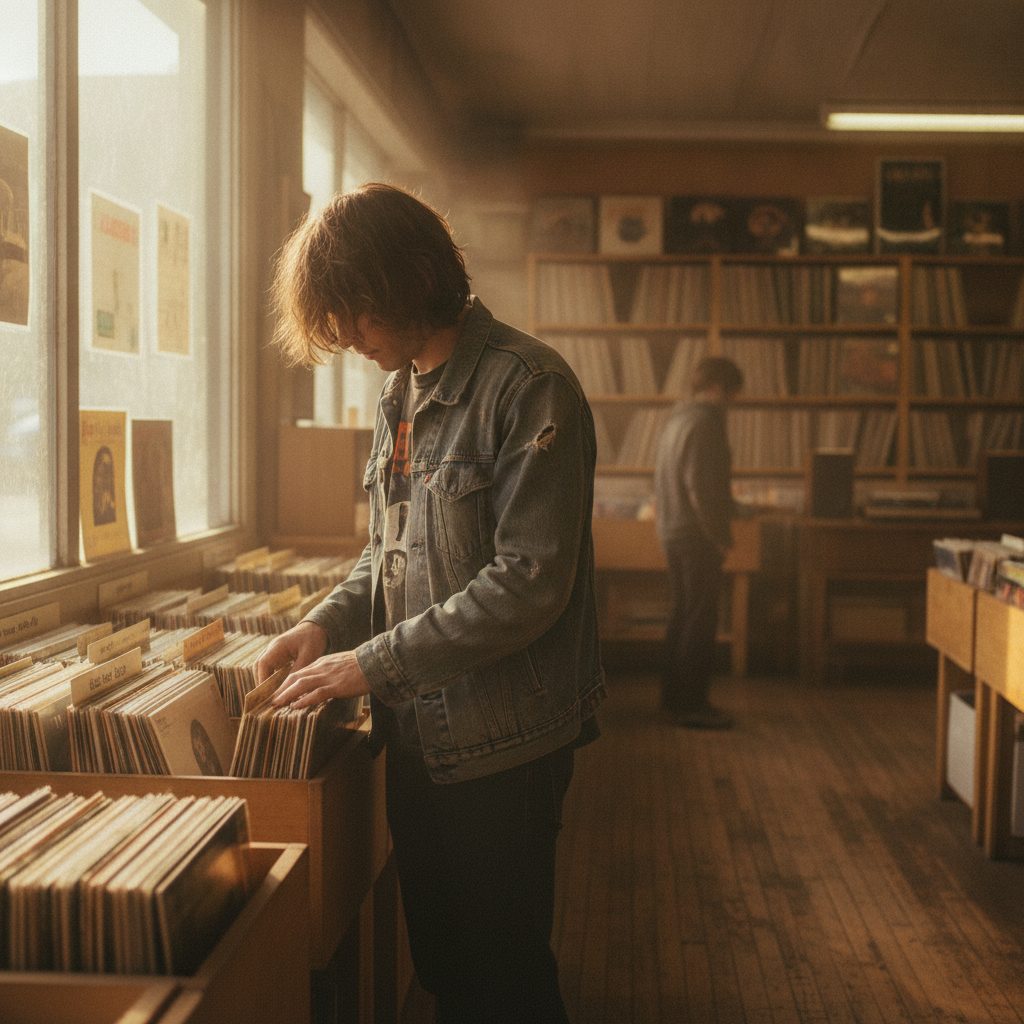
Vinyl has outsold CDs for several years running — and rock fans are the reason. Here's how to build a collection you'll actually listen to, without overpaying or wrecking your records.
Why records came back
Part of it is sound: a well-pressed record through decent speakers has a warmth and physical presence that compressed streams don't match — the format literally contains more musical information than an MP3. But the bigger driver is ritual. Vinyl makes listening an activity again: you pull the sleeve, drop the needle, sit with side one. No skipping, no shuffle. Rock, the genre of the album as a complete statement, benefits most of all — Dark Side of the Moon was sequenced to be heard front to back, and it hits different when you do.
There's also the artifact itself. Twelve-inch artwork, gatefolds, liner notes you can actually read, lyrics printed large. Streaming made music infinite and weightless; vinyl made it an object worth owning again.
Starting a collection
- Get a real turntable. Skip the $60 suitcase players with the built-in speakers — their heavy ceramic cartridges chew grooves. A basic Audio-Technica AT-LP60X or U-Turn Orbit is the sensible floor; a decent cartridge is the single biggest sound upgrade.
- Buy the albums you love first. Collections built for "value" end up as decor. Collections built around records you play end up as libraries. If a record won't get spun twice a year, think twice.
- Mix new pressings and used digs. Modern reissues of the classics are often excellent — properly remastered, heavy 180-gram vinyl. Used bins are where the adventure (and the bargains) live.
Digging in the Valley
Fresno has proper record stores — the Tower District especially, where used bins turn over constantly and classic rock is the bread and butter. The good stuff moves fast, so regulars win: stop in often, ask what came in this week, let the staff know what you're hunting. Estate sales across the Valley are the secret weapon. The '70s and '80s were peak vinyl decades, and those collections surface regularly here — often at a dollar or two a record, sometimes in time-capsule condition.
What to watch for
- Grading. Learn the scale: Near Mint, Very Good Plus, Very Good. VG+ is the sweet spot for used buys — plays clean, costs sane. Inspect under bright light before paying collector prices; surface marks matter less than deep scratches you can feel with a fingernail.
- Reissue quality. Not all reissues are equal. Budget pressings can be cut from mediocre sources; audiophile labels like Mobile Fidelity and Analogue Productions charge more and earn it. When in doubt, look up the pressing before buying — the community documents everything.
- Storage. Vertical, snug but not crammed, away from heat — this is critical in a Valley summer. A car trunk in July is where records go to die, and a warped LP is forever.
- Cleaning. A carbon-fiber brush before each play and a wet clean for used finds will do more for your sound than any equipment upgrade under $500.
Setup: the three tiers
Starter (under $300). A decent entry turntable with a built-in phono preamp into powered speakers. This is honest hi-fi — miles past any suitcase player, and enough to hear what the fuss is about.
The sweet spot ($500–800). A better deck (Pro-Ject Debut, Rega Planar 1 territory), separate phono stage or receiver, real bookshelf speakers. At this level, a clean used pressing can genuinely thrill — this is where most collectors should stop spending and start digging.
The rabbit hole ($1500+). Cartridge upgrades, tube warmth, isolation platforms. Wonderful, but the returns shrink fast. The best money in this hobby is almost always spent on records, not hardware.
The etiquette of the bins
Digging has unwritten rules. Don't hoard a stack you haven't checked — flip, decide, move on. Return records to the right section. Ask before you negotiate; most shops will deal on bulk, none enjoy haggling over a $4 record. And when you find the grail in a dollar bin — the clean first pressing someone priced as filler — enjoy the moment quietly. That's the sport.
The first five to buy
If the shelf is empty, start with records built for the format: Led Zeppelin IV (dynamics for days), The Dark Side of the Moon (the headphone album, even better on wax), Rumours (harmonies that float), Abbey Road (side two is a religious experience) and Back in Black (which will teach you exactly what your turntable can do). Five records, one education — and they'll never sit unplayed.